
Co-Creation Workshop
Co-creating the Safety, Facilities & Logistics framework.
A landmark working session that launched the collaborative implementation of the SFL framework for Ghana's legal education ecosystem — aligning leadership, operational unit heads, DTI and the consulting team on governance, ownership and the scope of the permanent, purpose-built examination centre.
0
Concurrent examination seats across six halls
0
Concurrent lecture seats planned
0
Strategic anchors affirmed
0
Phase 1 fast-track target (Q4)
Executive summary
A milestone in the legal education reform agenda.
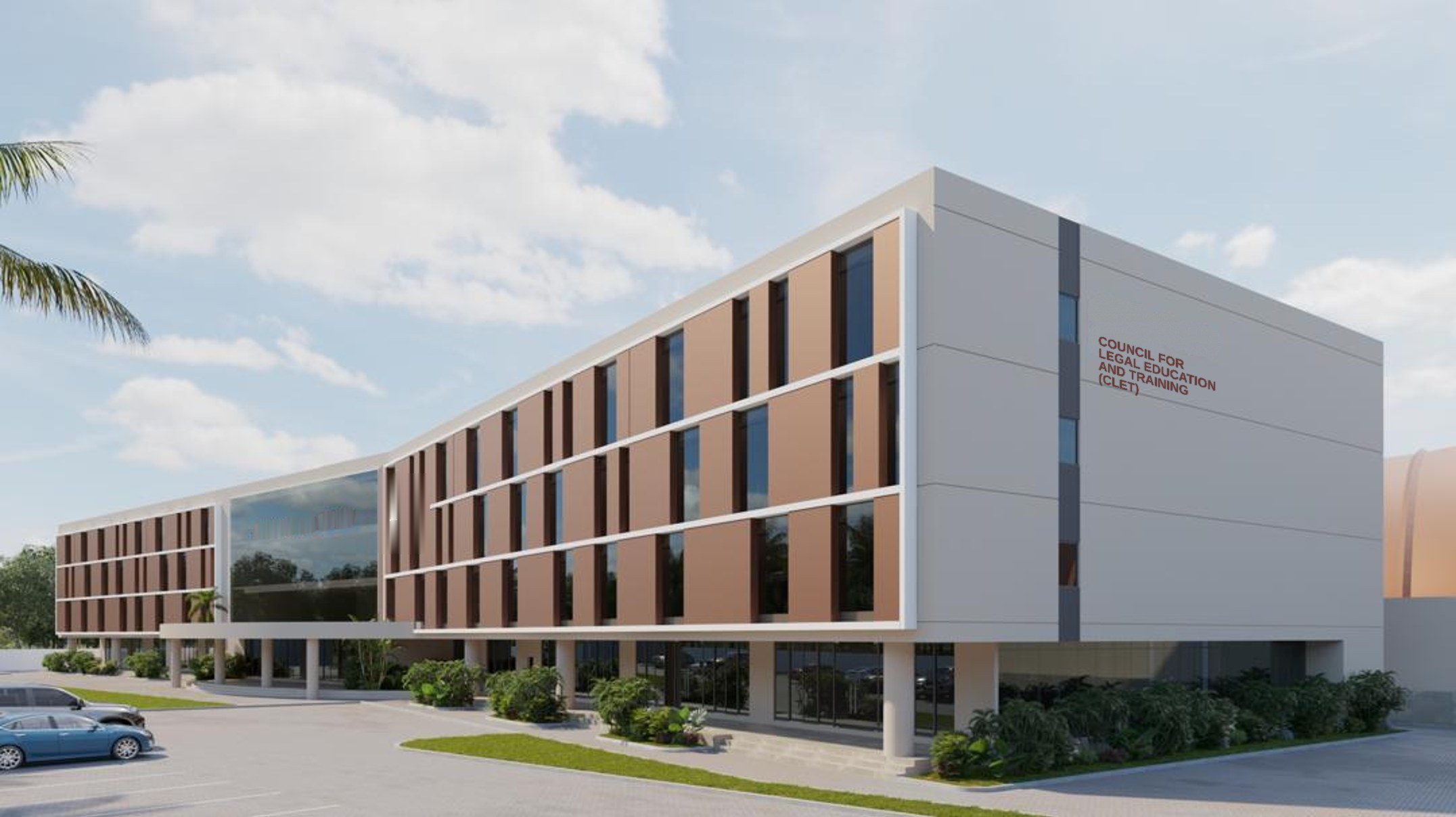
Convened by the Directorate of Safety, Facilities and Logistics and the appointed consulting team, the workshop framed the proposed Accra and Kumasi facilities not merely as buildings, but as institutional platforms for digital examinations, practice-ready legal education, accreditation support, safety, logistics and long-term sector governance.
Participants affirmed four strategic anchors — longevity, national coverage, digital transformation and co-creation — and confirmed an owner-led delivery model in which CLET/GSL defines the brief while the consulting team protects institutional quality throughout the project.
In the room
Moments from the co-creation session.
Leadership, operational unit heads and the consulting team in working session at the Accra City Hotel.
What was discussed & agreed
The decisions, in detail.
- Prof. Raymond Atuguba opened the session, noting the historical significance of the gathering as a milestone in the implementation of the Legal Education Act, 2026 (Act 1170).
- He emphasised that the facility would set a national benchmark that other accredited law faculties would be expected to meet, and urged participants to approach the work in a spirit of genuine co-creation.
- Mr. Enyo Tawiah, Director of SFL, oriented the room on the four-stage pathway to admission to the Ghana Bar, framing all design decisions within the reform context and CLET's dual role as regulator and operator.
- Agreed configuration: 3,000 concurrent seats across six examination halls of 500 seats each, sub-dividable or collapsible to 250 seats for smaller sittings.
- Four use modes: National Bar Examinations (primary), mock and practice examinations, computer-based legal education, and paper-based examinations via adaptable workstations.
- Fixed workstations with electronic locking and anti-theft features; column-free halls requiring post-tension or steel structural systems.
- Biometric/RFID identity verification, facial recognition where appropriate, comprehensive CCTV, resilient offline-capable delivery, and purpose-built data/server rooms integrated from the outset.
- Approximately 5,000 concurrent lecture seats: two halls of 1,000, six medium halls of 500 (collapsible to 250), plus seminar and tutorial rooms for 60–100 students.
- A single 3,000-seat multi-purpose auditorium for bar admission ceremonies and conferences, configured for hybrid connectivity — the capacity confirmed non-negotiable.
- A modern hybrid library combining physical archives with digital access to Westlaw, LexisNexis and similar platforms, plus quiet and collaborative reading spaces.
- Two judicial-standard moot courts — one configured as a live court with AV — with adjacent tutorial rooms reconfigurable for clinical legal education.
- Accra occupies a five-acre plot leased from the University of Ghana (50–99 years) within the Legon enclave; land described as 99% secured, with one administrative step expected to close by end of June 2026.
- The University's preference for a minimum six-storey development supersedes the earlier four-storey concept, necessitating a full design restart.
- Kumasi sits on a secured parcel gifted by Otumfuo Osei Tutu II, with a multi-zone modern campus under development; the consulting team will act as supervising consultants for the site.
- CLET is the institutional owner, represented at the strategic level by the Director of Legal Education; day-to-day delivery authority rests with the Director of SFL.
- The consulting team acts as technical advisor and institutional representative, with a duty of care that runs to the institution — never in consortium with or subservient to the contractor.
- A clear escalation pathway runs from the Director of SFL through the Director of Legal Education to the Board of CLET.
- Four working groups — Facility, Examination, Logistics and Digital — are to be formally stood up, with chairs confirmed by the Director of SFL.
- Finalise and adopt the project brief incorporating the agreed space schedule.
- Complete the updated concept design to a six-storey minimum, incorporating all agreed programmes.
- Confirm Accra land access from the University of Ghana and formally notify all parties.
- Stand up the four working groups and begin domain-level co-creation sessions.
From co-creation to a finalised brief.
The immediate priority is a complete, frozen functional brief — the foundation for the revised six-storey concept design and Phase 1 fast-track delivery.